ServicesWall Repair
Wall Repair in Irvington, NJ
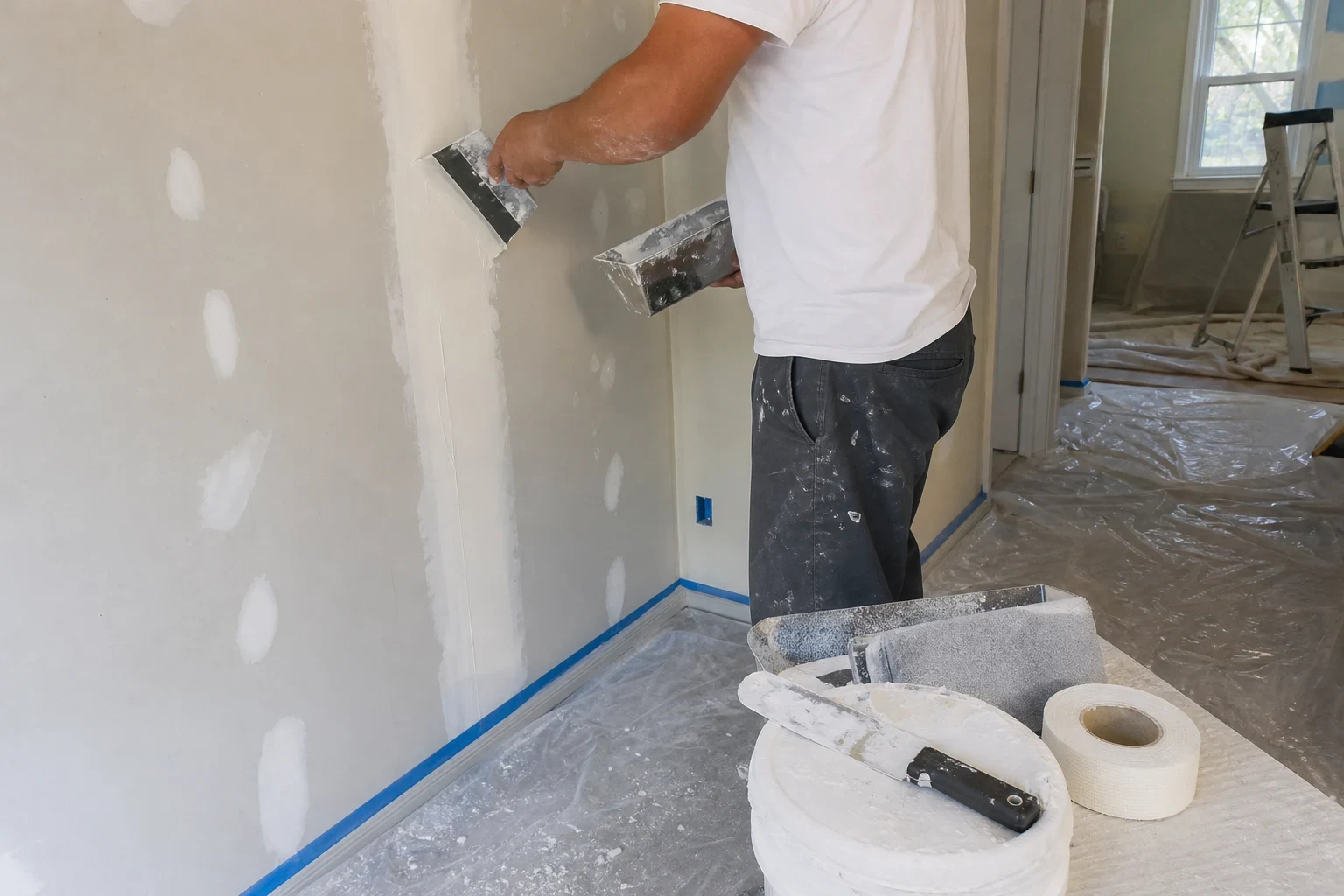
Cracked, dented or punched-through walls get fixed so they match the rest of the room. We repair drywall and older plaster, match the texture, and show you photos of what we found under the surface and what we did about it.
What wall repair covers
Wall repair is how we fix a whole wall surface, not just one hole. It might be a crack running off a door corner, a dent from furniture, tape bubbling along a seam, or a soft spot where water got in. It covers drywall and the plaster walls still found in many older homes around Irvington.
It is the right call when the damage is spread out or you are not sure what is going on underneath. If you have one clean hole, drywall patching is probably a better fit. If the whole wall needs new board, look at drywall hanging.
We take photos before we open anything, while it is open, and when it is done. You see the studs, the lath, the old tape, whatever is in there. That way you know why we did what we did.
What the work includes
Crack repair that holds
We cut out loose material along the crack, set tape in setting compound and feather it wide. Cracks that only get skimmed over tend to show up again.
Plaster and lath fixes
Old plaster pulls away from its lath over time. We re-attach loose sections where we can and cut back to sound material where we can't. Then we build it back up flush with the wall.
Holes, dents and gouges
Doorknob holes, furniture dings, anchor holes from old TV mounts. Small ones get filled and sanded. Bigger ones get a backed patch so the repair doesn't flex.
Seams and corner bead
Lifted tape gets cut out and re-taped. Dented or rusted corner bead gets replaced, not buried under more compound.
Texture matching and primer
We match smooth, orange peel or knockdown so the repair blends in. Then we prime it. If you want, we brush matching paint over just the fixed section so you are not repainting the room.
A clean work area
Floors and furniture get covered before we start. We vacuum and wipe down before we leave.
When a wall is telling you something
- A crack that reopens
- You filled it, painted it, and a few months later the line is back. That usually points to loose tape or plaster behind it, not a bad filler job.
- Bubbles or ridges along seams
- A raised line running straight up the wall is tape letting go. Left alone, it spreads and starts to peel in strips.
- Soft or stained spots
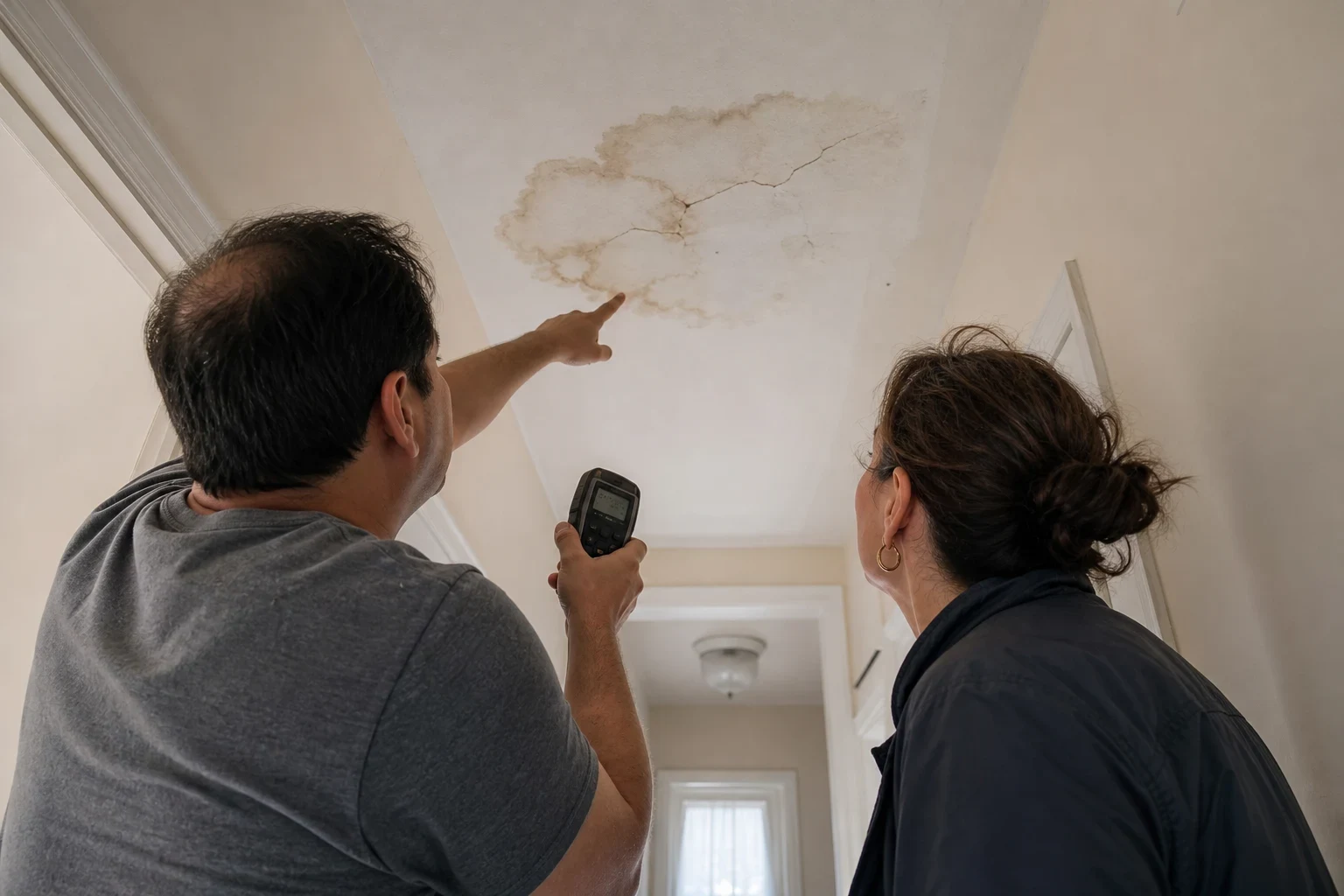
- Brown rings, peeling paint or a spot that gives when you press means moisture got in. Get the leak fixed first. Then we cut out the wet material and rebuild the wall.
- Hollow or bulging plaster
- Tap an old plaster wall. If one area sounds hollow or bows out, it has come loose from the lath. That section can crack wider or drop if it's ignored.
- Wear in rental units
- Landlords and property managers call us about anchor holes, scuffs worn through the paper and dented corners. The before and after pictures give you a clear record for your files.
How a wall repair goes
- 1
You tell us what you see
On the phone, describe the damage, which rooms and roughly how big. We set a time to come look.
- 2
We inspect and document
We check the wall, tap the plaster and look for signs of moisture, taking pictures as we go. Afterward you get a written estimate with each piece of work spelled out on its own.
- 3
Protect, open and repair
We cover floors and furniture, open up what needs opening and get shots of what's inside. Tape, patches and compound go on in coats.
- 4
Sand, match and prime
Each coat has to dry before the next, so most repairs take more than one visit. We tell you that up front. Then final sanding, texture matching and primer.
- 5
Walkthrough and record
We look over the wall with you in good light and clean up. You get the full set of pictures from start to finish.
What moves the price
Every wall is different, so we price it after we see it. You get a written estimate that breaks out the work. If we open the wall and find something we didn't expect, we show you the picture and talk with you before doing more.
- Drywall or plaster
- Plaster takes more steps and more drying time than drywall. Re-attaching loose plaster adds labor.
- How much area
- One crack and a whole wall of cracks are very different jobs. Several small repairs done in one visit cost less than separate trips.
- What's behind the surface
- Wet board, broken lath or damaged corner bead adds work. Nobody knows for sure until it's open, which is why we document it for you.
- Texture and finish
- Smooth walls show every flaw and need more coats and sanding. Matching a heavy or hand-applied texture takes extra time.
- Access and setup
- Tall stairwell walls need ladders or planks. A room full of furniture takes longer to protect.
Wall repair questions
- My walls are old plaster. Do they need to be torn out?
- Usually not. When most of the plaster is still holding, we fasten down the loose areas and patch over them. Where a section is crumbling or has let go of the lath, we cut back to solid material and fill it in level with the wall around it. You see the pictures and hear which way we'd go before we start.
- Will the repair show after painting?
- Done right, it shouldn't. Most of that comes from feathering the compound wide and matching the texture. Sheen matters too, since a patch can look different under flat paint than eggshell, so we talk about that before we start.
- How long does a wall repair take?
- Small repairs can be done in a visit or two. Larger ones take a few days because each coat of compound needs to dry. We give you the schedule with the estimate.
- How much dust will there be?
- Sanding makes some dust. We cover floors and furniture and close off the area where we can. We clean up before we leave each day.
- Why do you take so many photos?
- So you can see what was inside the wall and what we did about it. Landlords like having the record, and anyone can see the problem was fixed and not just covered over.
Get your walls looked at
We work in Irvington and nearby towns like Hillside, Maplewood and Union. Tell us what's going on and we'll set a time to come look and document what we find.