ServicesDrywall Patching
Drywall Patching in Irvington
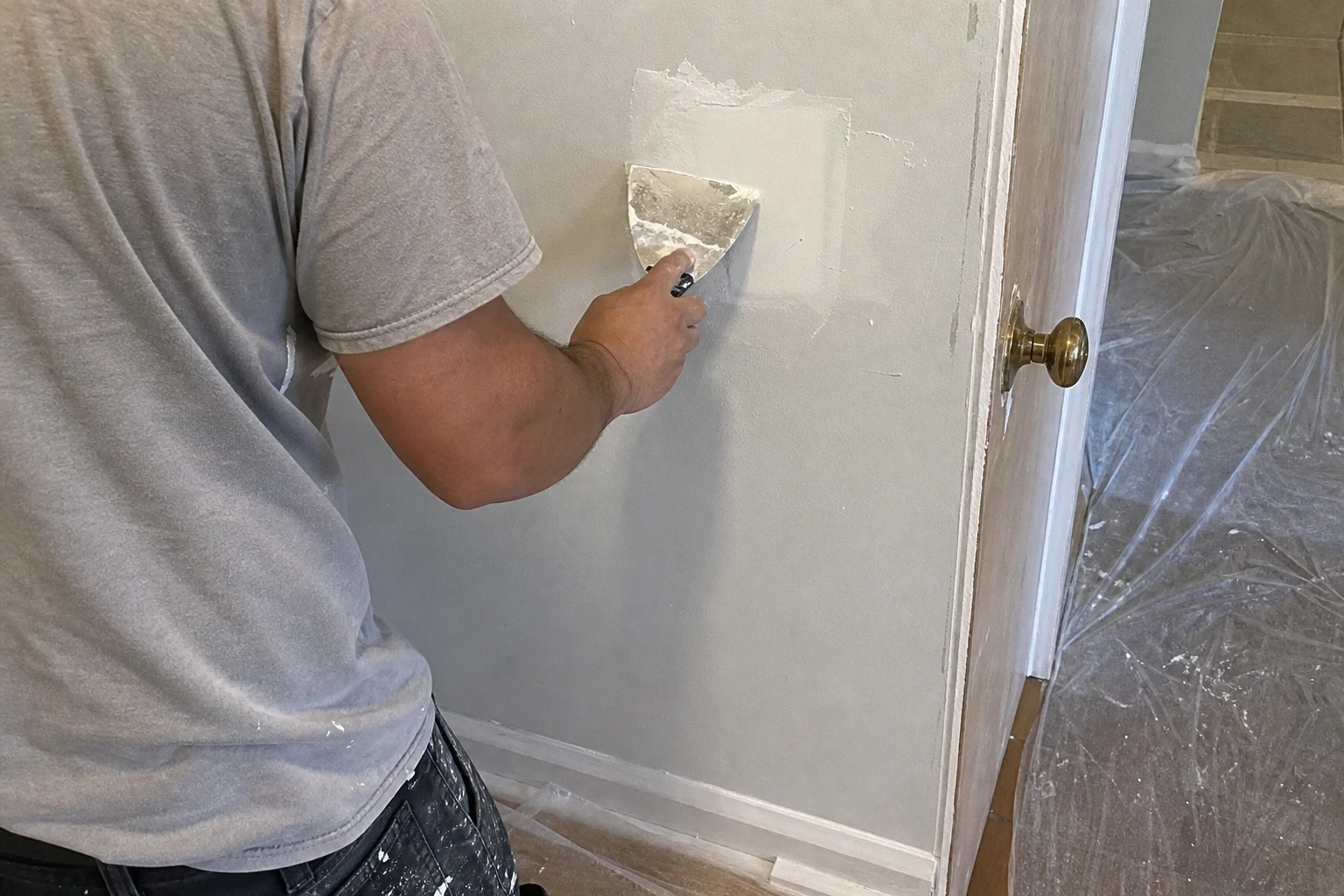
We patch the holes that build up in a lived-in home: doorknob dents, anchor holes, cable cut-outs and fist-size punches. Each patch is backed, coated and sanded so it sits flat with the wall. You get photos of the hole, the patch and the finish.
What a Good Patch Needs
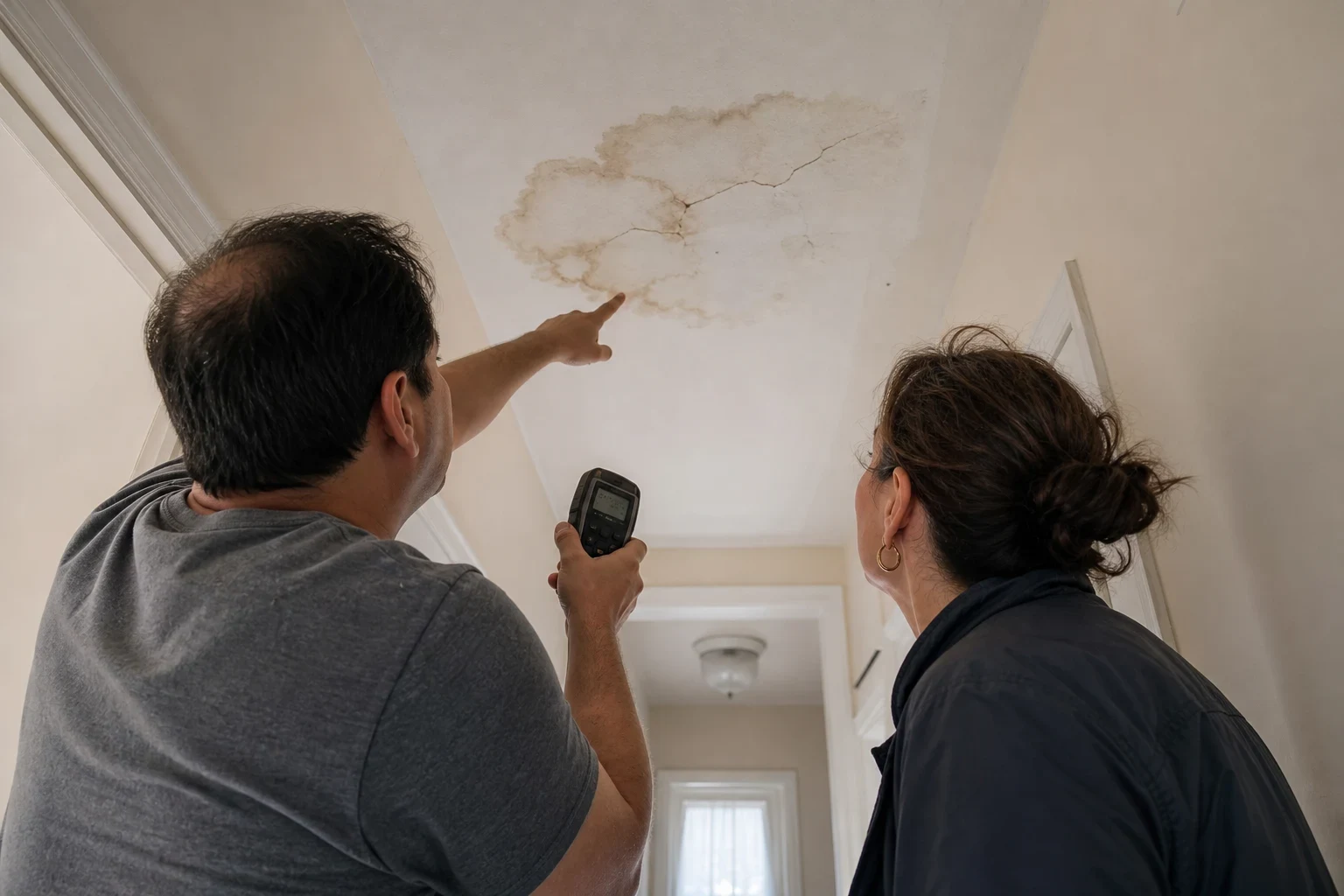
A patch is a fix for a hole in otherwise sound drywall. If the board around it is solid and dry, patching is the right call. If it is soft, stained or sagging, that is a bigger job, and we will tell you so and point you to drywall repair instead.
Most bad patches fail for the same few reasons. The compound went on too thick and shrank. Nothing was behind the patch, so it flexed and cracked. Or the edges were never feathered out, so a bump shows every time the light hits it. We work around all of these.
We take photos before we cut, after the backing goes in, after each coat and at the end. Landlords and property managers find this useful when they are not on site. Homeowners like seeing what is inside the wall before it gets closed up.
What Our Patching Work Includes
Clean cut to solid board
We square up ragged holes with a drywall saw until we reach firm paper and gypsum. Torn face paper gets cut back and sealed so it will not bubble under the compound.
Backing that holds
Small holes get a mesh or paper-faced patch. Anything bigger than a few inches gets wood or drywall backing screwed in behind it, then a new piece of board cut to fit.
Thin coats, wide edges
We use setting compound for the first coat because it hardens without much shrinking. Finish coats go on thin and spread wide, often well past the hole, so the patch tapers into the wall.
Sanding and primer
Each coat is sanded smooth, and the patch gets primer so fresh compound does not soak up paint and show as a dull spot.
Texture matching
If your wall has orange peel, knockdown or a light skim texture, we match it over the patch before priming. Smooth walls stay smooth.
A clean work area
Floors get covered, outlets near the work get taped, and we vacuum the dust when we leave. If you want the patch painted too, our paint touch-ups service covers that.
Signs a Wall Needs a Patch
- Doorknob holes
- A door swung too hard, or the stopper went missing. The round dent behind it grows each time it gets hit.
- Old anchor and mount holes
- TV mounts, shelves and curtain rods leave clusters of holes and torn anchors. A dab of spackle rarely hides them for long.
- Cut-outs from other trades
- Electricians and cable installers often open a square in the wall and leave it. Those need backing and a real patch, not just tape.
- Nail pops and loose tape
- Small round bumps or a lifting seam mean a fastener backed out or tape let go. We reset the screw and patch over it.
- A patch that keeps cracking
- If an old repair cracks in the same spot every winter, it likely had no backing. We open it up, back it and redo it.
How a Patching Job Runs
- 1
Start with a phone call
Give us a rough count of the holes, their size and which rooms they are in. Tell us if the wall is smooth or textured, and we will know which backing and compound to load on the truck.
- 2
Look, cut and photograph
At your home we look at each hole, cut it back to solid board and take a photo. If we find wet board or something bigger behind the wall, we stop and show you before going on.
- 3
Back, tape and coat
We set backing, fit the patch, tape it and lay the first coat. Most patches need two or three coats with drying time between, so a job often spans more than one visit.
- 4
Sand, texture and prime
We sand each coat flat, match the texture and prime. You get the finished shots along with a short note on what was done at each spot.
What Moves the Cost of a Patch
Patching is priced by the work, not by a flat number per hole. A dozen small anchor holes can take less time than one large cut-out. We go over what we see and explain the price by phone before we start.
- Size and count of holes
- Small holes fill quickly. Larger ones need backing, a new piece of board and more coats. Several holes in one room cost less per hole than the same holes spread through the house.
- Texture on the wall
- Smooth walls are the simplest. Matching orange peel or knockdown adds a step and some test work.
- Location
- A patch at eye level in a hallway is easy to reach. Holes high on a stairwell wall or behind fixed cabinets take more setup.
- What we find behind it
- If the board around a hole is soft or the old patch was never backed, more needs to be cut out. We show you what we found before adding work.
- Number of visits
- Compound needs to dry between coats. Grouping all your patches into one schedule keeps return trips down.
Drywall Patching Questions
- Will I be able to see the patch afterward?
- On a smooth wall that is primed and painted, a well-feathered patch should not show in normal light. Low raking light from a window can reveal almost any wall flaw, patched or not. We check each patch with a work light before priming to catch any ridges.
- Can you patch plaster walls?
- Many older homes around Irvington, Maplewood and East Orange have plaster in some rooms. Small holes in plaster can be patched with the right base coat and compound. When a big section of plaster has pulled away from the wood strips behind it, a patch will not stay put. That calls for wall repair instead, and we will tell you plainly.
- Do you paint the patch too?
- We prime every patch. Painting it to match is a separate paint touch-ups job, and we can schedule both together. If you have leftover paint from the room, set it aside for us.
- How many visits does a patch need?
- A handful of small holes is often done in one trip, since quick-setting compound hardens fast enough to coat again the same day. Bigger patches have to dry between coats, so plan on two or three visits spread over a few days. We lay out the schedule on the phone before we book you in.
- Why do you send photos?
- Once a patch is closed up you cannot see the backing, the tape or how far it was cut back. The pictures show you the work was done right underneath. Landlords also use them to keep a record of each unit.
Ready to Close Up Those Holes
Count the holes, note which rooms they are in and give us a ring. We will tell you what the work involves and when we can get it done.