ServicesCeiling Repair
Ceiling Repair in Irvington
Cracks, water stains, sagging panels and popped nails. We open up what needs opening, fix it, match the texture and leave a ceiling that blends in. You get photos of what we found behind the surface and each step of the repair.
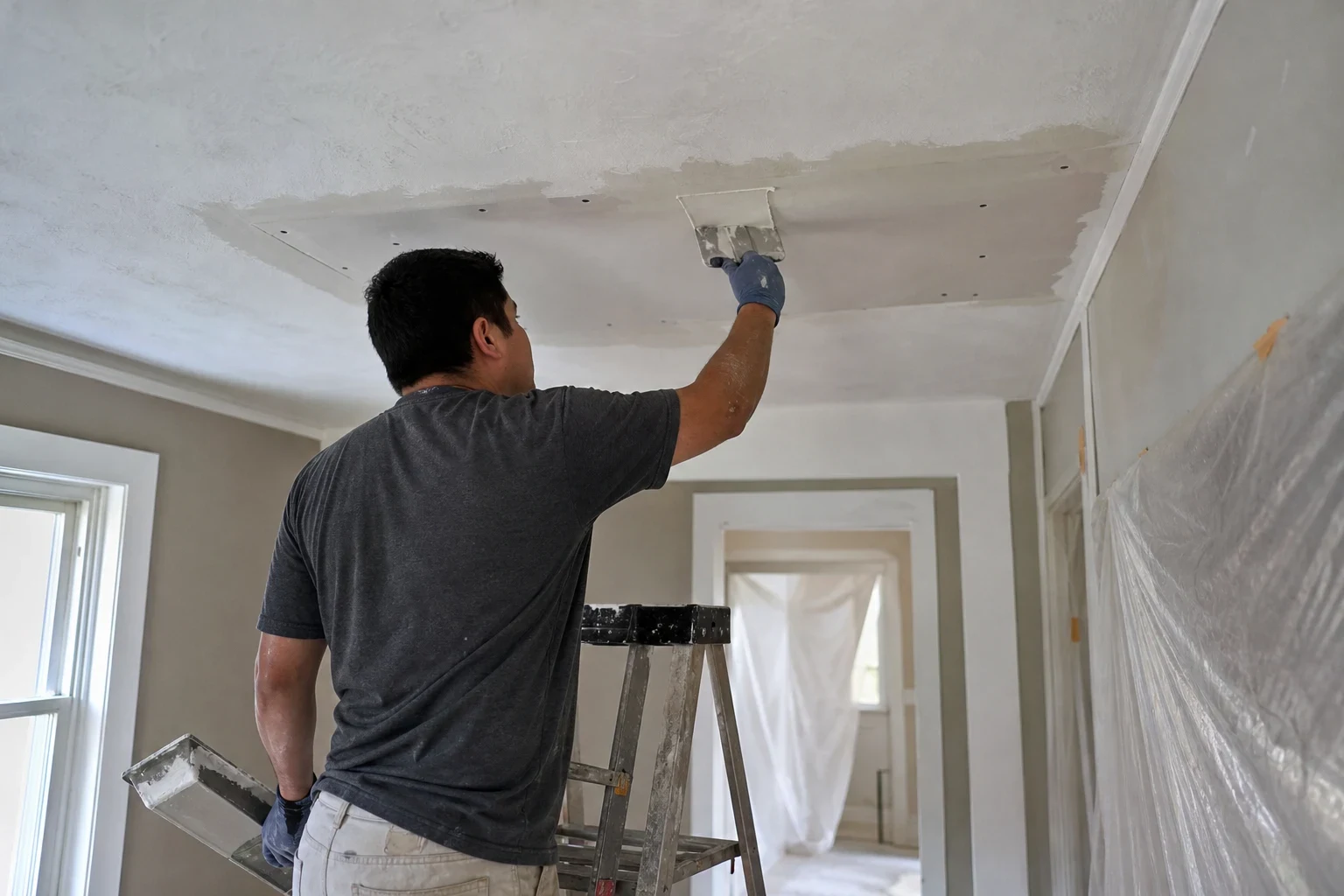
What ceiling repair covers
A ceiling is harder to fix than a wall. You are working overhead, gravity pulls on every patch, and light from windows shows every ridge. A patch that looks fine on a wall can stand out on a ceiling once the afternoon sun hits it.
We handle the common problems: cracks along taped joints, stains and soft spots after a leak, nail and screw pops, sagging boards, and holes from old fixtures or attic work. When the damage is small, we patch it. When a board is soft or pulling down, we cut it out and replace it.
Before we close anything up, we take photos. You see the framing, the condition of the board and the fasteners. Then you see the patch, the tape, the mud coats and the finished surface. Landlords and property managers can pass those pictures along to a tenant or owner as a record of the work.
What the work includes
Moisture check before repair
After a leak, we check the area with a moisture meter. Wet drywall gets cut out, not painted over. The leak itself has to be fixed first by whoever handles that work.
Crack and joint repair
Cracks along seams usually mean the tape has let go. We cut out loose tape, re-tape with mesh or paper and feather the mud wide so it does not show.
Sagging board replacement
A board that has dropped away from the joists won't stay up with more screws alone. We remove it, check the framing and hang a new piece screwed on the right spacing.
Texture matching
Smooth, orange peel, knockdown or popcorn. We try our mix and spray pattern on a piece of cardboard before it goes on the ceiling, then adjust until it lines up with the surface around it.
Primer and paint blending
Fresh joint compound drinks up paint faster than the old ceiling around it, which leaves a dull spot. We seal the new mud with primer first, then brush and roll paint over just the fixed section so it blends in. If you kept a can from the last paint job, set it out for us.
A clean work area
We cover floors and furniture, tape plastic where dust can travel and vacuum when we're done.
When a ceiling is telling you something
Rings of brown or yellow
That ring marks where water soaked into the board. It may feel dry today, but the paper face and the gypsum core can stay weak under the paint.
A ceiling that dips
Hold a flashlight flat against the ceiling and look along it. A belly or wave between joists means the board is pulling loose or has taken on water.
Cracks that keep coming back
Painting over a crack hides it for a season. In New Jersey, heating and humidity swings open the same joint again each winter until the tape is redone.
Nail pops in rows
Small round bumps along a joist line mean fasteners are backing out. A few are normal. Many in a row can mean the board is loosening.
Bubbling or peeling paint
Paint that blisters overhead often has moisture behind it. We check before we scrape.
How a ceiling repair job goes
- 1
You describe it by phone
Tell us what you see and where. We ask about leaks, the age of the house and the texture so we come prepared.
- 2
We look first
We check the damage, take pictures and explain what needs patching and what needs replacing. You get a written estimate before work starts.
- 3
Prep and repair
We cover the room, set up our ladders or staging, and cut out bad material. You get a shot of the open ceiling before we hang, tape and coat the repair.
- 4
Dry time and finish
Joint compound needs time between coats, so most ceiling jobs take more than one visit. On the last visit we sand, match texture, prime and touch up.
- 5
Final photos and cleanup
We clean up and send the finished photos next to the before shots, so you have a record of the whole job.
What moves the cost of ceiling repair
No two ceilings cost the same to fix. A single nail pop and a water-damaged section over a bedroom are very different jobs. We look first and give you a written estimate so you know the number before we start.
- Size and type of damage
- A small crack is a patch job. A soft, stained section means cutting out and replacing board, which adds material and time.
- Reach and room setup
- A stairwell or a vaulted room means we bring taller ladders or set up staging. A room packed with furniture takes longer to cover before we begin.
- Texture
- Smooth ceilings need careful sanding to hide the patch. Popcorn and knockdown take extra steps to match. In older homes, we may suggest testing popcorn texture before we disturb it.
- What is behind the board
- Damaged framing or old plaster above the drywall can change the plan. If we find something, you see a picture of it before we go on.
What people ask about ceiling repair
Something not covered here? (973) 447-8743
Is a coat of paint enough for a water stain?
Sometimes. An old stain on dry, firm board can be sealed with stain-blocking primer and painted. If the board is damp or gives when you press it, paint will not hold, so we cut that piece out and replace it.
Will the patch show?
We aim for a repair you won't pick out from the floor. We feather the mud wide, sand under a work light and match the texture. Paint sheen matters too, so leftover paint helps.
Do you find where the leak came from?
We can show you where water came through the ceiling and take pictures of what we see. Fixing the source is separate work. We repair the ceiling once the leak has been stopped.
How long does it take?
Small repairs can be done in one or two visits. Larger sections usually take two or three, because each coat of compound needs to dry before the next.
Do I need to move furniture out?
No. We move what we can, cover the rest and seal off the area with plastic. You may want to take small breakables out of the room.
Get that ceiling looked at
Tell us what you are seeing overhead. We work in Irvington and nearby towns like Maplewood and Union, and you see pictures of the job from start to finish.