ServicesDrywall Hanging
Drywall Hanging in Irvington
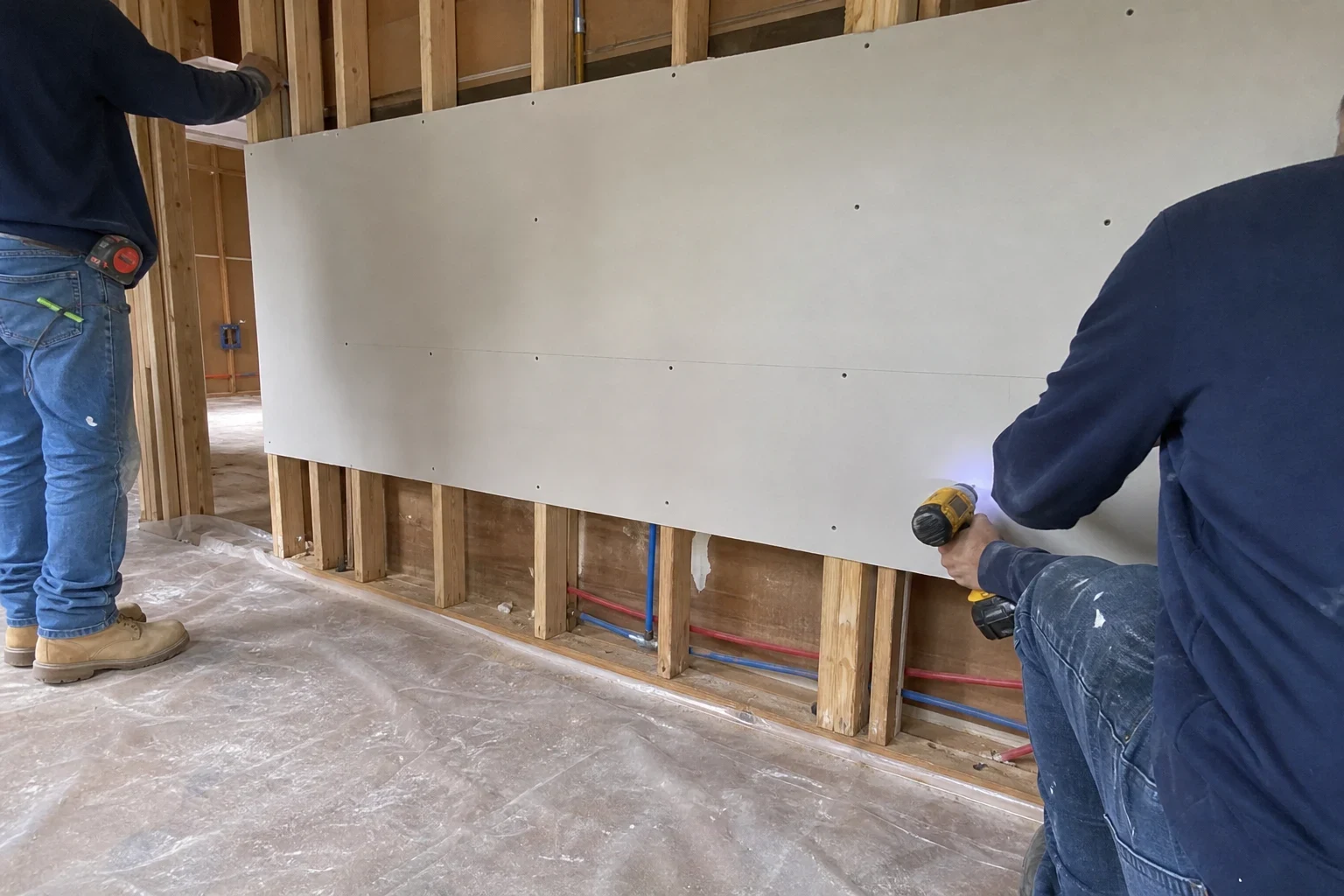
We hang new drywall on open framing, finished basements, garages and walls stripped after damage. You get the right board for each room, seams laid out to finish flat, and photos of the framing and fastening before any tape or mud covers them.
What Hanging Covers and When It Fits
This is full-sheet work on bare studs or joists. It is the answer when there is nothing left to patch: a basement you are finishing, a new partition wall, a ceiling that came down, or a wall stripped after a leak left the old board soaked or moldy.
How the board goes up decides how the wall looks for the next twenty years. Seams in the wrong spot, screws sunk too deep, or butt joints stacked in one line all telegraph through paint later. We plan each wall before the first cut, and we photograph the framing and the fastened board so you can see what sits behind the finish.
Once the board is up, most jobs move right into our drywall finishing work: tape, mud and sanding to a smooth surface.
What Our Drywall Hanging Covers
- Checking the framing first
- We look for bowed studs, missing blocking at corners and ceiling edges, and anything loose. Problems get flagged and shown to you before board goes on, because a crooked stud will show through a flat wall.
- The right board for the room
- Most walls get standard half-inch board. Near tubs and in damp basements we use moisture-resistant board. The wall or ceiling next to an attached garage gets fire-rated board, because the building rules require that protection there. Ceilings often get thicker or sag-resistant board so they stay flat.
- Seam layout and fastening
- We hang sheets to keep joints few and staggered, with butt ends kept off the same stud line. Each screw sinks a hair under the face paper so mud can cover it, but never so deep that it breaks the paper and loses its grip. Spacing follows what the board and framing call for.
- Cutouts and openings
- Outlets, switch boxes, light fixtures and vents are cut clean so cover plates sit flat. Window and door openings get full pieces around the corners where possible to cut down on cracking later.
- Pictures at each stage
- You get photos of the framing, the board as hung and the fastening pattern. For landlords and property managers, that is a record of the work without having to be on site.
- A clean work area
- We cover floors, keep offcuts bagged as we go, and haul away scrap board at the end of the job.
Signs You Need New Drywall Hung
The studs are showing
A basement, attic room or addition with open framing needs board before anything else can happen.
Water damage past patching size
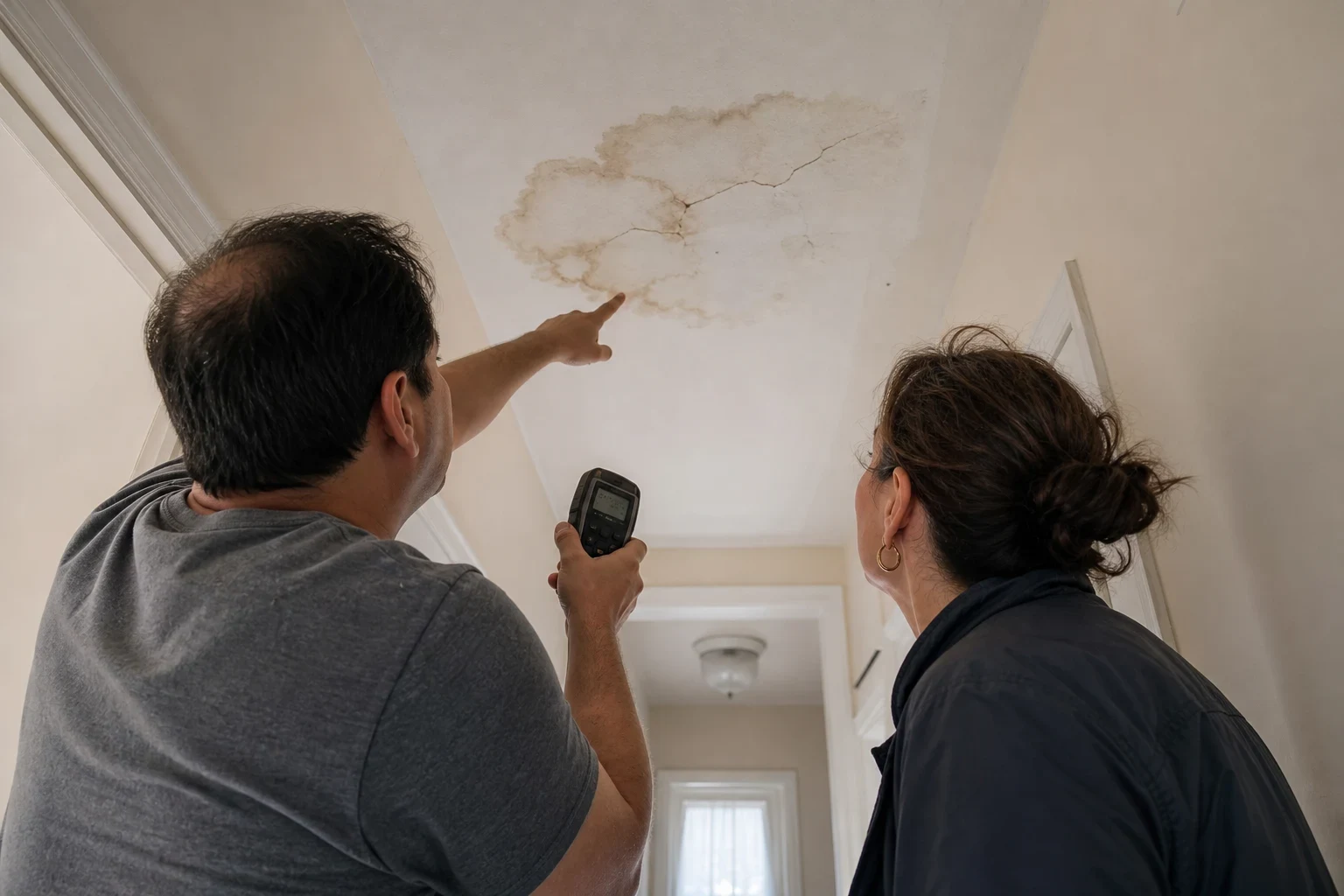
If board is soft, stained through or smells musty across a large area, cutting a patch just chases the damage. Full sheets are usually cleaner and last longer.
Old plaster that keeps failing
Many older homes in Irvington and the towns around it still have plaster on lath. When it is cracking and pulling off the lath in sections, hanging new drywall over sound framing can be the simpler fix.
A sagging ceiling
Ceiling board that bows between joists, or nail pops in rows, often means it was hung too thin or fastened poorly. Our ceiling repair page covers smaller fixes, but a wide sag usually calls for new board.
A new wall or closet
Splitting a room or framing a closet means new drywall on both faces of the wall.
How a Hanging Job Runs
- 1
Look and measure
We come out, look at the framing, measure the rooms and talk about what each space is used for. You get a written estimate that lists the board types and the work.
- 2
Permit, if your project needs one
New walls and basement work often need a permit from the town. When yours does, we tell you up front and take care of pulling it, so the inspection steps are part of the plan.
- 3
Prep and protect
Floors get covered, furniture moved or wrapped, and we set up a cutting area. We take pictures of the framing before the first sheet goes up.
- 4
Hang the board
Ceilings first, then walls, so wall sheets support the ceiling edges. We cut openings, check every fastener, and record the finished hang.
- 5
Clean up and next steps
Scrap is bagged and removed, and the floor is vacuumed. If finishing is part of your job, taping starts next.
What Moves the Cost of Hanging Drywall
Your price depends on how many sheets the job takes and how easy the rooms are to work in. Every line on the estimate gets explained, so nothing turns up later as a surprise. You get your quote by phone once we have seen the space.
- Square footage and ceiling height
- More sheets means more material and labor. Ceilings above eight feet need scaffolding or extra hands to lift board.
- Board type
- Moisture-resistant, fire-rated and sag-resistant boards cost more than standard board, and each room may need a different one.
- Access
- Narrow stairs, tight basements and third-floor rooms make it harder to carry full sheets in. Sometimes we have to use shorter sheets, which means more seams to finish.
- Framing condition
- Bowed studs or missing blocking need fixing before board goes on so the wall comes out flat.
- Tear-out and permits
- Removing old board or plaster adds labor and disposal. A permit, when required, adds its fee and inspection time.
Drywall Hanging Questions
Something not covered here? (973) 447-8743
Does hanging include taping and finishing?
Hanging is putting the board up. Taping, mud and sanding are our drywall finishing service, and most customers book both together. We price them as separate lines so you can see each part.
Can new board go over the plaster I already have?
It depends on the plaster. If it is solid and close to flat, it can stay, and the new board gets fastened through it into the studs with longer screws. If it is loose, bulging or crumbling, it needs to come out first. We check it and send you pictures so you can see why we suggest one or the other.
How long does it take?
A single room is often hung in a day. A full basement can take several days. Finishing adds more time after that because each coat of mud has to dry.
Do I need a permit for new drywall?
Replacing board on an existing wall often does not. New walls, basement finishing and fire-rated walls usually do. We tell you what your job needs and pull the permit when one is required.
Can I see the work if I am not home?
Yes. Landlords and property managers often are not on site, so we send pictures of the framing, the hung board and the fastening as each stage wraps up.
Ready to Put Up New Walls
Tell us what rooms you are working on and what is there now. We will set a time to look and measure, then give you a written estimate.